
Disability Inclusion Foundations
Understanding How Inclusive Environments Support Participation
Introduction
Disability inclusion means creating environments where people with disabilities can participate fully in learning, work, and community life. Instead of expecting individuals to adapt to inaccessible systems, inclusive environments are designed to remove barriers and support participation for everyone.
EduLinked Inclusion Capability Index
This lesson contributes to your Inclusion Capability development across five measurable domains:
Disability Inclusion Competency
Understanding barriers, social model, and inclusive environments
This LessonCommunication Accessibility
AAC, Easy Read, inclusive meeting practices
Cultural Confidence & Equity
Cultural perspectives, representation, inclusive practice
Knowledge Systems Awareness
Diverse ways of knowing and learning
Self-Advocacy & Accessibility
Communicating needs, navigating support systems
Your Capability Journey
This lesson builds Stage 1-2: Awareness to Emerging capability in Disability Inclusion Competency.
Why This Topic Matters
Understanding disability inclusion helps organisations:
- identify barriers that limit participation
- design learning and work environments that welcome diverse participants
- improve accessibility across physical, digital, and communication systems
- build more inclusive and respectful communities
Disability inclusion benefits everyone by creating systems that are more flexible, usable, and responsive to real needs.
Key Concepts
This lesson introduces the foundations of disability inclusion and the barriers that affect participation.
What Is Disability Inclusion?

Disability inclusion means ensuring that people with disabilities can participate fully in everyday life.
This includes participation in:
- education
- employment
- community activities
- digital environments
Key insight: Inclusion focuses on creating environments that support participation, not just access.
The Social Model of Disability
The social model of disability is a way of understanding disability that shifts focus from the person to the environment.
Medical Model (Outdated)
- Disability is seen as a "problem" with the person
- The person needs to be "fixed" or "cured"
- Focus is on individual limitations
- Creates dependency and exclusion
Example: Wheelchair User and Stairs
Medical model thinking: "This person cannot walk up stairs because they have a disability."
Social model thinking: "This person is disabled by the stairs because there is no ramp or lift."
The solution: Add a ramp or lift—and the barrier is removed.
Key insight: When we remove barriers, people with impairments are no longer disabled by their environment. This is the foundation of inclusive practice.
Reasonable Adjustments

Reasonable adjustments are changes made to remove barriers and enable people with disability to participate equally. Under Australian law, these are often required—not optional.
🏛️ Workplace Adjustments
- Flexible work hours or location
- Modified workstations or equipment
- Written instructions instead of verbal
- Regular check-ins with clear feedback
- Quiet spaces for concentration
📚 Education Adjustments
- Extra time for assessments
- Alternative formats (large print, audio)
- Note-taking support
- Accessible digital materials
- Preferential seating arrangements
🏢 Service Adjustments
- Alternative communication methods
- Physical access improvements
- Longer appointment times
- Easy Read information
- Staff awareness training
What Makes an Adjustment "Reasonable"?
An adjustment is considered reasonable when it:
- Effectively removes the barrier
- Does not impose unjustifiable hardship (cost, disruption)
- Benefits the person with disability
- Is made in consultation with the person
Remember: "Reasonable" depends on context—but always start by asking what would help.
Best practice: Always ask the person what adjustments they need. They are the expert on their own needs.
The NDIS Framework

The National Disability Insurance Scheme (NDIS) provides funding and support to Australians with significant and permanent disability. Understanding the NDIS helps you work effectively with participants.
🤝 NDIS Principles
Choice & Control
People with disability choose and control their own supports
Individualised Support
Supports are tailored to each person's goals and needs
Person-Centred
The person is at the centre of all decisions
Community Inclusion
Supporting participation in community life
📋 NDIS Code of Conduct
Anyone who works with NDIS participants must follow the Code of Conduct. This includes:
- Respect – Treat people with disability with respect
- Communication – Support informed choice and control
- Privacy – Respect privacy and confidentiality
- Safety – Provide safe, quality supports
- Integrity – Act with honesty and transparency
- Prevention – Prevent and respond to abuse and neglect
Your Role Under the NDIS
Even if you don't work directly for an NDIS provider, you may interact with NDIS participants. Your responsibilities include:
- Respecting their choices and decisions
- Supporting their goals—not deciding for them
- Reporting any concerns about abuse or neglect
- Working collaboratively with their support network
Important: The NDIS Code of Conduct applies to all workers who support NDIS participants—paid or unpaid.
Understanding Barriers
Barriers can exist in many places. They may be:
- physical barriers such as stairs without ramps
- communication barriers such as complex language or lack of captions
- digital barriers such as websites that do not work with assistive technology
- attitudinal barriers such as assumptions about what people can or cannot do
Remember: When barriers are removed, more people can participate with dignity and confidence.
Cultural Intersection and Disability
Disability does not exist in isolation. Culture, language, and identity intersect with disability in important ways that affect how people experience barriers and support.
Cultural Identity
Different cultures have varying understandings of disability. Some communities may view disability through medical, spiritual, or social lenses. Respecting these perspectives while promoting inclusion is essential.
Language & Communication
People from culturally and linguistically diverse (CALD) backgrounds may face additional barriers—language differences, unfamiliarity with Australian systems, or different cultural norms around seeking help.
Family & Community
In many cultures, family plays a central role in disability support. Inclusive practice recognises and works with family and community structures, not just the individual.
Culturally responsive inclusion means: Asking about and respecting cultural needs, providing information in accessible formats and languages, involving family or community when appropriate, and avoiding assumptions based on stereotypes.
Key insight: Inclusion is most effective when it respects both disability and cultural identity. One-size-fits-all approaches often fail to meet diverse needs.
Assistive Technology
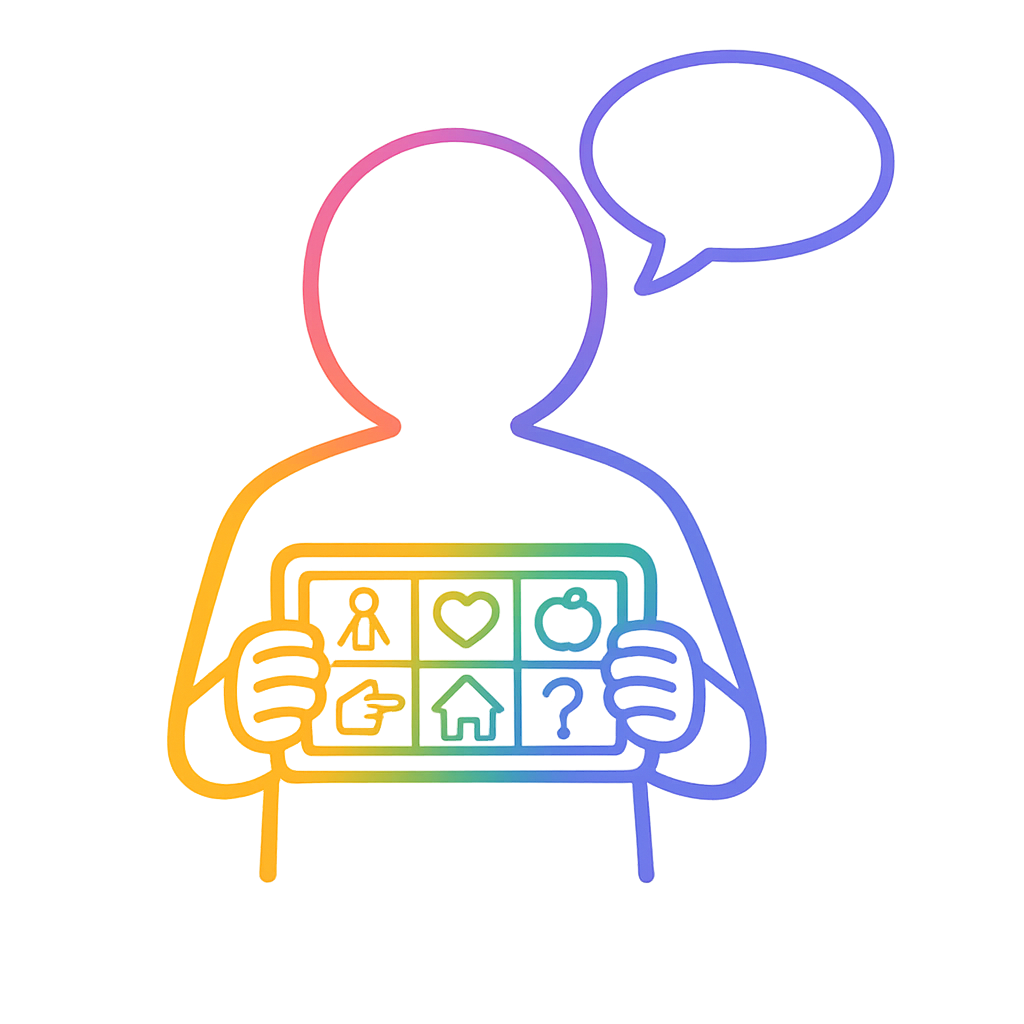
Assistive technology (AT) is any device, software, or equipment that helps a person with disability participate more fully. AT removes barriers and enables independence.
Vision Support
- Screen readers (JAWS, NVDA, VoiceOver)
- Screen magnification software
- Braille displays and notetakers
- Voice-activated devices
Hearing Support
- Hearing aids and cochlear implants
- Assistive listening devices
- Captioning and real-time transcription
- Visual alert systems
Communication Support
- AAC devices (speech-generating devices)
- Communication apps and software
- Picture exchange systems
- Eye-gaze technology
Mobility Support
- Powered and manual wheelchairs
- Walking frames and mobility aids
- Environmental control units
- Smart home technology
Cognitive Support
- Reminder and scheduling apps
- Simplified interfaces
- GPS and wayfinding tools
- Task management software
Your role: You don't need to be an expert in assistive technology. However, you should be aware that AT exists, respect how people use it, and never touch or move someone's equipment without permission. If you're unsure how to interact with someone using AT, ask them.
Remember: Assistive technology is an extension of the person. Always ask before touching or adjusting someone's device, and give them time to use it in their own way.
Practical Examples
Inclusive environments may support disability inclusion by:
Physical Access
-
Step-free access: Ramps, lifts, and accessible entrances
-
Accessible facilities: Toilets, seating, and pathways designed for access
Digital Inclusion
-
Captions and transcripts: Making digital content easier to access
-
Assistive technology support: Websites and systems that work with screen readers and keyboard navigation
Communication
-
Clear language: Reducing jargon and complexity
-
Flexible communication: Supporting written, spoken, and alternative communication methods
These changes often improve usability for many people, not only people with disabilities.
Disability Inclusion Self-Assessment
How inclusive is your current learning or work environment?
Take Action
Disability inclusion often begins with practical changes.
Examples include:
Inclusive environments are built through thoughtful design, accessibility, and respect.
Remember: Disability inclusion is about creating environments where everyone can participate with dignity and confidence.
Safeguarding and Inclusion
What is Safeguarding?
Safeguarding means protecting people from harm, abuse, neglect, and discrimination.
In disability contexts, safeguarding also means:
- Making sure environments are accessible and inclusive
- Respecting people's rights, choices, and dignity
- Taking action when something feels unsafe or unfair
Inclusion is not just being "nice" — it is part of keeping people safe.
Why This Matters
When inclusion is missing, people with disability can experience:
These are not small issues — they can have serious impacts on wellbeing, safety, and rights.
Real-World Examples
There have been real cases in Australia where lack of inclusion led to harm. These documented cases illustrate why safeguarding matters:
Documented Cases
Workplace Exploitation (NDIS Training Concerns)
People with disability working unpaid for extended periods under "training" programs, with reports of workers being "worked like slaves" in social enterprise settings.
Unsafe Restraint Practices (NDIS Therapy Case)
Children with disability restrained by multiple staff in restrictive environments during therapy programs, raising serious concerns about safety and human rights.
Restrictive Practices and Rights Concerns
Many restrictive practices identified as potential human rights violations, with a significant rise in instances of unauthorised restrictive practices reported.
Access Discrimination (Assistance Dog Case)
Family denied accommodation despite legal protections for assistance animals, highlighting ongoing discrimination faced by people who rely on support animals.
Safeguarding Risks in Everyday Placements
You may not see extreme situations—but small actions still matter.
Examples of everyday risks:
- Ignoring someone's communication needs
- Speaking about a person instead of to them
- Leaving someone out of activities
- Not making reasonable adjustments
- Dismissing concerns or complaints
- Assuming someone "can't" rather than asking
Small exclusions can build into larger harm if not addressed.
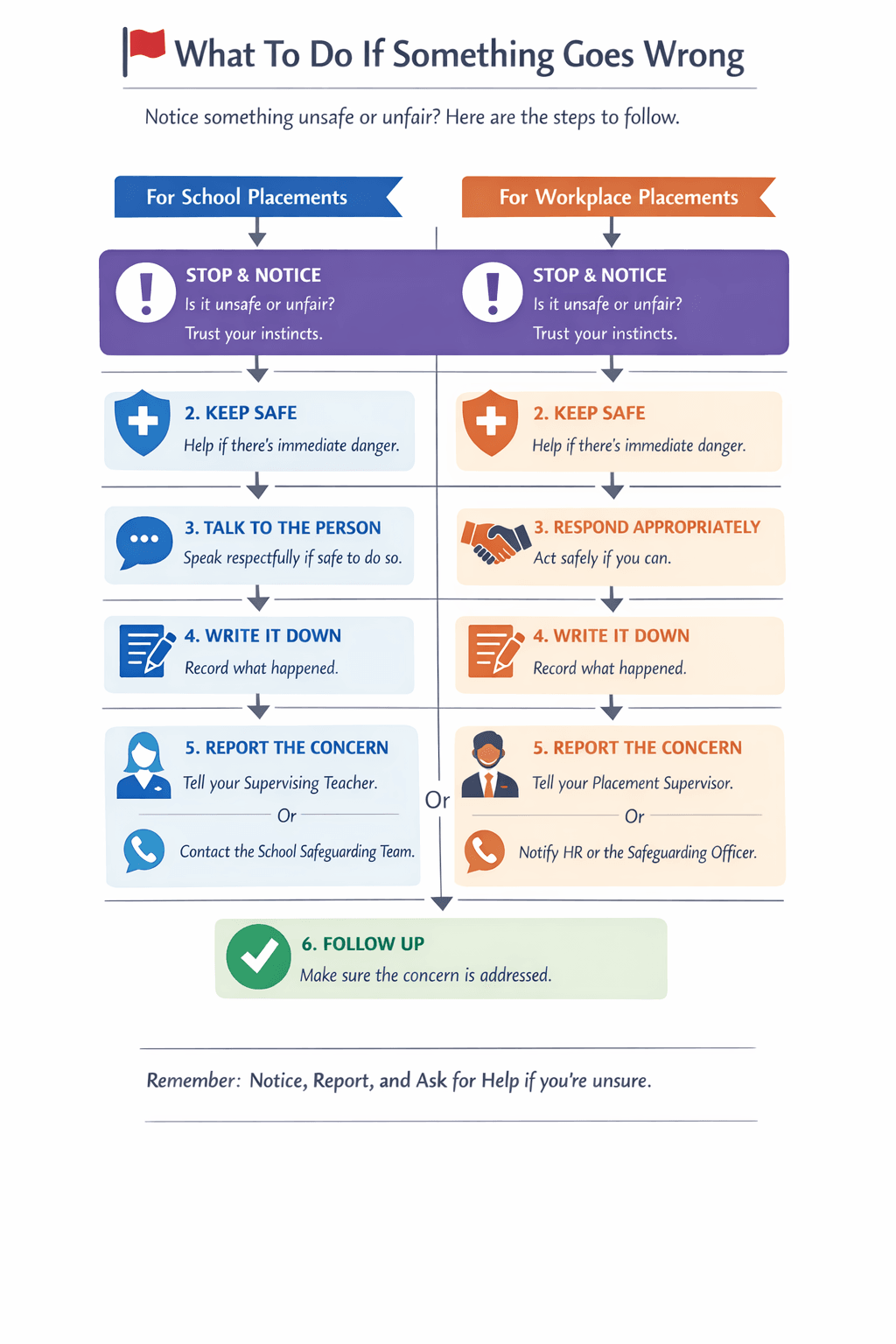
What To Do If Something Goes Wrong
Sometimes you may notice something that feels unsafe, unfair, or not inclusive.
You are not expected to fix everything yourself—but you are expected to take it seriously and act appropriately.
Step-by-Step Safeguarding Response
🛑 Pause and Notice
Ask yourself:
- Does this feel unsafe, unfair, or disrespectful?
- Is someone being excluded, ignored, or harmed?
Trust your instincts. If something feels wrong, it's worth checking.
👤 Prioritise Immediate Safety
If someone is in immediate danger, seek urgent help:
- Alert a supervisor immediately
- Follow workplace emergency procedures
Safety always comes first.
🗣️ Respond Appropriately (If Safe to Do So)
If it is safe and appropriate:
- Include the person (e.g. invite them into an activity)
- Use respectful communication
- Gently challenge exclusion (e.g. "How can we include them?")
⚠️ Do not:
- Put yourself or others at risk
- Confront aggressively
- Take on the role of investigator
📝 Record What You Observed
Write down:
- What happened
- When and where it happened
- Who was involved
- What you did (if anything)
Keep it factual and objective—no assumptions or opinions.
🚩 Report the Concern
- Tell your placement supervisor as soon as possible
- Follow the organisation's reporting or safeguarding procedures
- If unsure, ask: "Who should I report this to?"
Reporting is part of your responsibility—not "getting someone in trouble."
🤝 Follow Up (If Appropriate)
- Check that the concern has been acknowledged
- Continue to support inclusive practice in your role
If You're Unsure
It's okay to not be certain.
If in doubt, speak to a supervisor. It is always better to raise a concern than ignore it.
Safeguarding Response Pathway
Use this diagram as a quick reference for the steps to take when you have a safeguarding concern during your placement:
Remember: If you are ever unsure whether something is a safeguarding issue, it is always better to ask. Speak with your supervisor, placement coordinator, or a trusted staff member.
What Safeguarding Looks Like in Practice
In your placement, safeguarding means:
Notice
- Are there barriers (physical, social, communication)?
- Is anyone being excluded or treated unfairly?
Communicate
- Speak directly to the person
- Use respectful, inclusive language
- Ask what support is needed (don't assume)
Respect Rights
- Support choice and independence
- Gain consent where appropriate
- Value the person's voice
Act
- Raise concerns with a supervisor if something feels wrong
- Follow workplace safeguarding or reporting processes
- Don't ignore unsafe situations
🤔 Reflection Activity
Think about one of the real-world examples above and respond to these questions:
Your language matters: You are welcome to respond in your native language or preferred language if that feels more comfortable. We value your reflections in whatever language helps you express yourself best.
Key Takeaway: Inclusion and safeguarding are connected. When you support inclusion, you are also helping to keep people safe.
NDIS Video: Safety, Honesty, Integrity and Transparency
Watch this important video from the NDIS Quality and Safeguards Commission about the NDIS Code of Conduct and what it means for workers:
Key Points from This Video:
- Safety: Always act with care and skill to keep people safe from harm
- Honesty: Be truthful and transparent in your work and communication
- Integrity: Act ethically and in the best interests of the people you support
- Transparency: Be open about your actions, qualifications, and any concerns
Reflect: How do these principles apply to your placement? Think about how you can demonstrate safety, honesty, integrity, and transparency in your daily practice.
What Good Inclusion Looks Like
Inclusion is not just about avoiding harm—it's about actively creating environments where everyone can participate, feel respected, and belong.
Everyday Inclusive Practice
In your placement, good inclusion looks like:
Communication
- Speaking directly to the person
- Using clear, respectful language
- Taking time to listen
Participation
- Making sure everyone can join activities
- Adapting tasks if needed
- Checking: "Is this accessible for everyone?"
Respect
- Valuing each person's choices and preferences
- Avoiding assumptions about what someone can or cannot do
- Supporting independence where possible
Adjustments
- Offering support when needed
- Being flexible (e.g. time, communication style, environment)
- Asking: "What would help here?"
Inclusion in Action
- Inviting people in, not leaving them out
- Noticing who is missing or excluded
- Taking small steps to include others
Inclusion often happens through small, everyday actions.
Compare: Inclusion vs Exclusion
Inclusive Practice
- Speaks directly to the person
- Adapts activities
- Listens and responds
- Includes people in decisions
Non-Inclusive Practice
- Speaks over or about the person
- Excludes from activities
- Ignores communication needs
- Makes decisions without them
Reflection Activity
Think about a time when you felt included—or excluded. Respond to the questions below:
Quick Check Before You Act
When you're unsure what to do, pause and ask yourself:
Is this inclusive?
- Is everyone able to participate?
- Am I including the person in what's happening?
Is this respectful?
- Am I speaking to the person, not about them?
- Am I listening and valuing their response?
Is this safe?
- Could this cause harm, distress, or exclusion?
- Does this feel right?
If you're still unsure:
One-Line Reminder: Include. Respect. Keep Safe.
Quick Inclusion Checklist
Knowledge Hub
Explore related topics and continue your learning journey:
Leave a Comment